
Keep the mud on site
Silt Fence & Sediment Barriers in Cleveland, OH
Perimeter silt fence, storm inlet protection and upkeep until the ground is seeded and stable.
- No charge to walk your property, and every quote comes in writing
- Itemized pricing: prep, topsoil, seed mix and erosion control listed separately
- A printed watering and first-mow sheet left on every new lawn
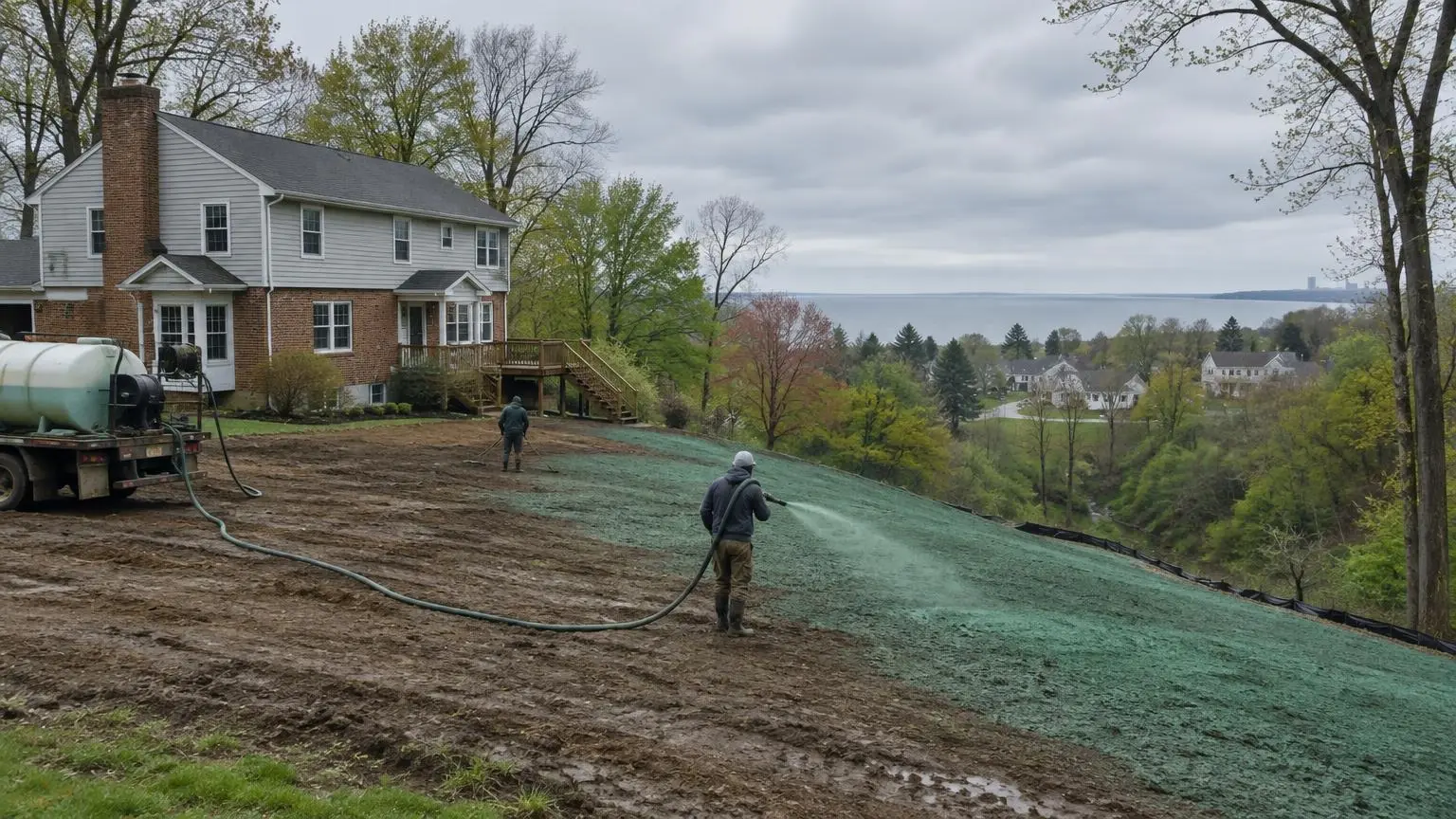
Sediment Control That Holds Up
Silt fence & sediment barriers in Cleveland keep soil from leaving a construction site and reaching streets, storm drains and creeks while the ground is bare. We handle silt fence installation along site perimeters, inlet protection at storm drains, sediment control around stockpiles, and the repairs and removal that follow. Builders and site contractors bring us in as silt fence contractors at the start of a job and then again to seed and stabilize at the end, so the same crew covers both halves of the erosion control plan.
Why it matters here
Sediment is the main thing a site's stormwater plan is written to stop. Ohio EPA's Construction Stormwater General Permit covers sites disturbing one or more acres, and no earthwork should begin until the site's stormwater pollution prevention plan is written. Local codes add their own layer: Euclid's erosion and sediment control chapter, for instance, provides for an abbreviated plan on sites disturbing as little as one-tenth of an acre and treats the construction entrance as a regulated point. The Northeast Ohio Regional Sewer District runs a regional stormwater program aimed at flooding, streambank erosion and water quality across much of the area. Mud in a catch basin is visible to everyone, including inspectors.
How silt fence actually works
Silt fence is a woven geotextile fabric, trenched into the ground and supported by stakes, set along the contour on the downhill side of disturbed ground. It slows sheet flow so soil settles out behind it. It is not meant to stop a concentrated stream of water; set across a ditch or channel, it overtops or blows out. Most failures we see come from three mistakes: the bottom edge laid on the surface instead of buried, fence run straight downhill instead of along the contour, and no maintenance after the first big storm.
Built for heavy clay and frequent rain
On the clay till soils common in Northeast Ohio, runoff starts quickly and carries fine silt that is slow to settle. The USDA's Mahoning series, a typical upland soil here, has a silty clay subsoil and a perched water table near the surface from October through June. That means more runoff, more often. Cleveland averages about 41 inches of precipitation a year spread across close to 159 wet days, so fence gets tested constantly. We trench it in properly, set stakes close enough to hold a load of wet sediment, and switch to stabilized or wire-reinforced fence below long slopes.
Inlet protection and other sediment controls
Storm inlets on and next to a site need their own protection: filter fabric under the grate, silt fence or bale rings around area inlets, sandbag or gravel barriers, or inserts that sit below the grate. We also place filter socks or logs where fence will not work, such as on pavement, and around stockpiles of topsoil.
Maintenance and removal
Sediment control only works if it is kept up. After heavy rain, fence sags, sediment builds up behind it, and stakes pull loose. We offer inspection and repair visits, clean-out of sediment behind fence, and removal once the site is seeded and stable, followed by seeding the strip where the fence stood.
Sediment Control Services
Installed to the plan and kept working until the site is stable.
Silt fence installation
Standard and wire-backed fence trenched in along the contour.
Storm inlet protection
Fabric, bale, sandbag, gravel or under-grate devices at catch basins.
Filter socks and logs
Sediment barriers for pavement, curb lines and places fence cannot be trenched.
Stockpile perimeter control
Fence or socks around topsoil and spoil piles.
Inspection and repair
Post-storm checks, re-staking, re-trenching and sediment removal.
Removal and seeding
Fence pulled after stabilization and the strip seeded.

Published Sediment Control Unit Prices
| Item | Published price |
|---|---|
| Standard (unreinforced) silt fence, each 100 ft (state DOT 2025 erosion unit prices) | $378 |
| Reinforced (stabilized) silt fence, each 100 ft (same DOT list) | $748 |
| Silt fence ring around a storm inlet, per inlet (same DOT list) | $102 |
| Straw-bale ring at a storm inlet, per inlet (same DOT list) | $135 |
| Sandbag inlet barrier, per inlet (same DOT list) | $141 |
| Stone-and-mesh inlet filter, per inlet (same DOT list) | $172 |
| Gate-style device set below the grate, per inlet (same DOT list) | $169 |
Unit prices from a public rate list, not Cleveland quotes. Length, soil, access and maintenance visits shift the total, and we bill the amount written on the quote you approve.
Installation Steps
1. Review the plan
We read the erosion and sediment control drawings and walk the perimeter.
2. Lay out the line
Fence is located along the contour, with ends turned uphill.
3. Trench and set
Fabric toe buried, stakes driven, fence tensioned.
4. Protect inlets
Storm inlets on and next to the site get their own barriers.
5. Maintain and remove
Repairs after storms, removal after the ground is seeded and stable.
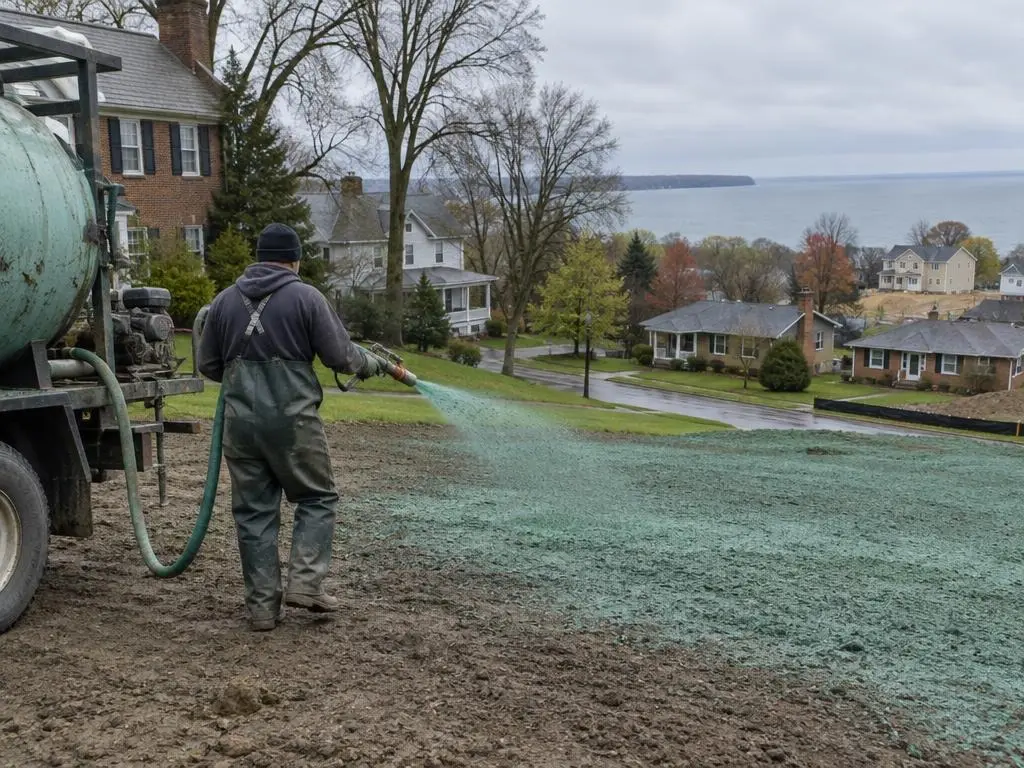
Why Choose Us for Silt Fence & Sediment Barriers
Trenched, not laid on top
The fabric toe is buried, which is where most fence failures start.
One crew, start to finish
We put the fence up and seed the site that lets it come down.
Maintenance on call
Post-storm repairs before an inspector finds the problem.
Silt Fence & Sediment Barriers Questions
How deep should silt fence be buried?
The lower edge of the fabric gets buried in a trench and backfilled so water cannot run underneath. Your site plan or the local standard sets the exact depth, and we install to it.
Can silt fence go across a ditch?
It should not. Silt fence is for sheet flow, not concentrated water. Ditches and channels need check dams or other controls designed for flow.
When can the silt fence come down?
After the area above it is stabilized, usually with established vegetation, and the inspector or plan allows it. We remove it and seed the disturbed strip.
Do you protect storm drains in the street?
Yes, when the plan or the city calls for it. We use inserts, socks or barriers suited to curb inlets so traffic and drainage still work.
Do small residential projects need silt fence?
It depends on the city and the size of the disturbance. Some local codes reach down to one-tenth of an acre, so check with your building department; we can install to whatever they require.
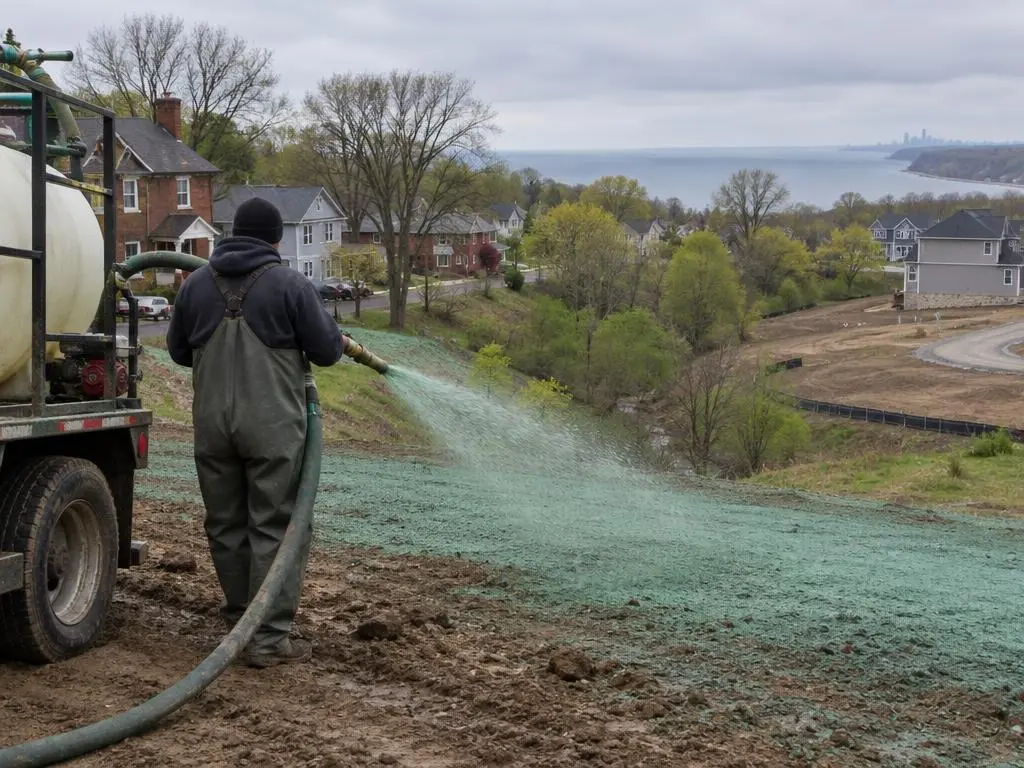
Silt Fence & Sediment Barriers Service Areas
- Hydroseeding in Cleveland, OH
- Hydroseeding in Strongsville, OH
- Hydroseeding in North Royalton, OH
- Hydroseeding in Brecksville, OH
- Hydroseeding in Avon, OH
- Hydroseeding in Avon Lake, OH
- Hydroseeding in North Ridgeville, OH
- Hydroseeding in Solon, OH
- Hydroseeding in Medina, OH
- Hydroseeding in Brunswick, OH
- Hydroseeding in Hudson, OH
- Hydroseeding in Twinsburg, OH
- Hydroseeding in Mentor, OH
- Hydroseeding in Aurora, OH
- Hydroseeding in Parma, OH
- Hydroseeding in Olmsted Falls, OH
- Hydroseeding in Chagrin Falls, OH
- Hydroseeding in Chardon, OH
- Hydroseeding in Willoughby, OH
- Hydroseeding in Independence, OH
- Hydroseeding in Bay Village, OH
- Hydroseeding in Euclid, OH
- Hydroseeding in Hinckley Township, OH
Get a Silt Fence & Sediment Barriers Estimate
Send the site plan for a written silt fence estimate.